

You take a peek at your closet, and the first thing you see is clutter throughout it. A creeping thought sneaks in: “I can just get to that tomorrow.” You know that you most probably won’t, and you might even find yourself among the 25% of American families who admit that they have a clutter problem. In this blog, we’ll explore why and how to organize your closet in a way that will make sense to you and your family.
Why Closet Organization Matters
Despite how overwhelmed and busy you might feel now, there are plenty of excellent reasons to start working on decluttering your closets right away:
- Less clutter, more peace of mind: It’s hard to enjoy your space when you’re constantly stepping over piles of clothes or boxes. Not only is that clutter annoying, but it can even pose a safety risk to your family.
- Daily time savings: You are busy enough as it is. Every moment of your day that you can reclaim is precious. When your wardrobe is well organized, it’s easier to find what you’re looking for, and getting back some time for yourself means that you can spend more time with your family.
- Teaching your little ones to be self-reliant: By learning to keep their stuff organized, your children develop habits of organization and responsibility that they will carry with them throughout life.
Although it might seem like a small step in the right direction, organizing your closets can have major positive impacts for your family — especially in a home where life moves at a fast pace.
Step 1 — Declutter Before You Organize
Before organizing, the first step should be removing clutter. Writing on fluencyleadership.com, Catherine Ducharme said this about decluttering a closet before organizing it:
“By decluttering and making those hard decisions to part with the excess, I finally felt a sense of control and peace. Only then could I effectively organize my closet, making it a space that served me well.”
Indeed, there is a sense of control that comes with first decluttering your closet before you attempt to organize it.
Get the whole family involved in this part of the process and sort your clothing items into 3 piles: Keep, Toss, and Donate.
Once you have sorted all of the clothing into those piles, you can take the necessary steps to get your clothing thrown out or donated, and then begin to organize the “keep” pile in your closet.
Step 2 — Maximize Your Closet Space
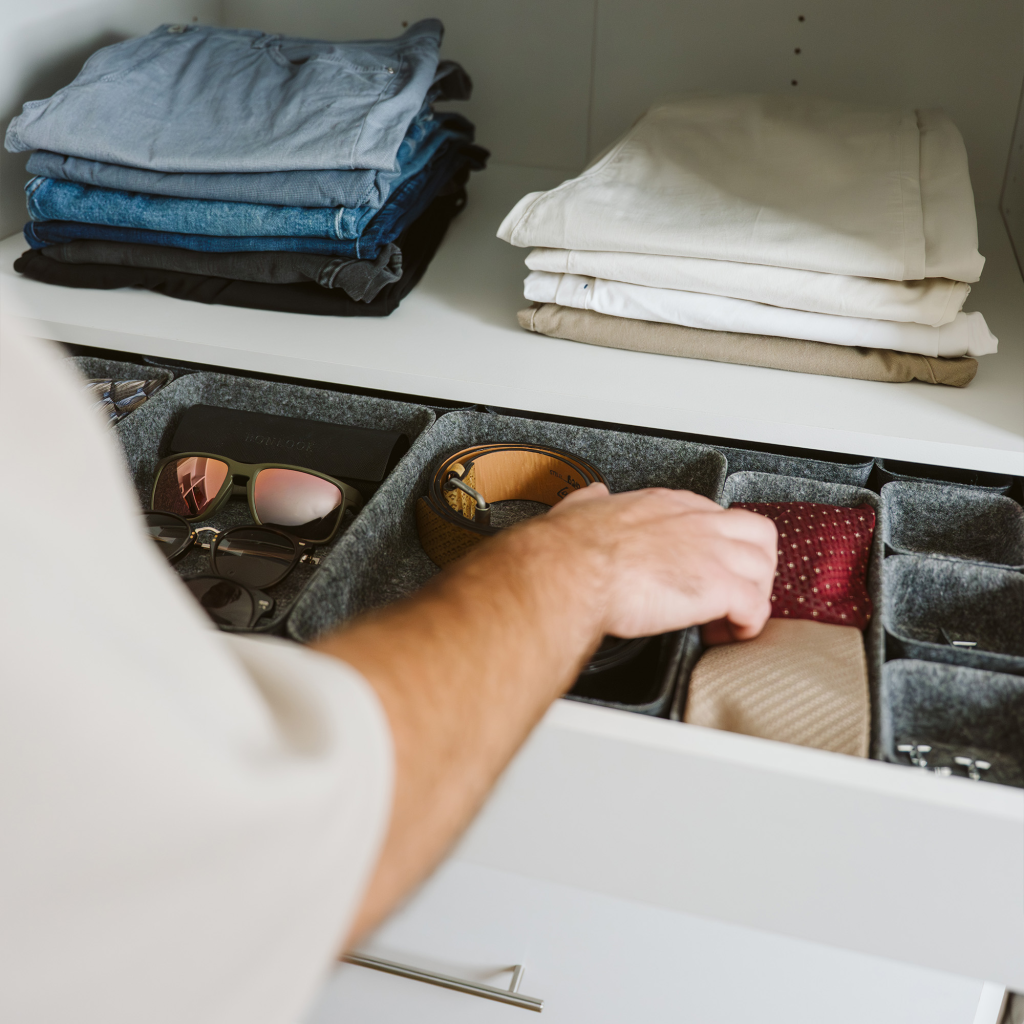
The amount of closet space in an American home is estimated to be approximately 146 square feet on average. In other words, you are not dealing with an abundance of space when it comes to your closets, so you should try to make the most of every inch. There are several approaches that you can take to make this happen. Some of the most notable ones include:
Use Closet Organizers to Clear Up Some Space
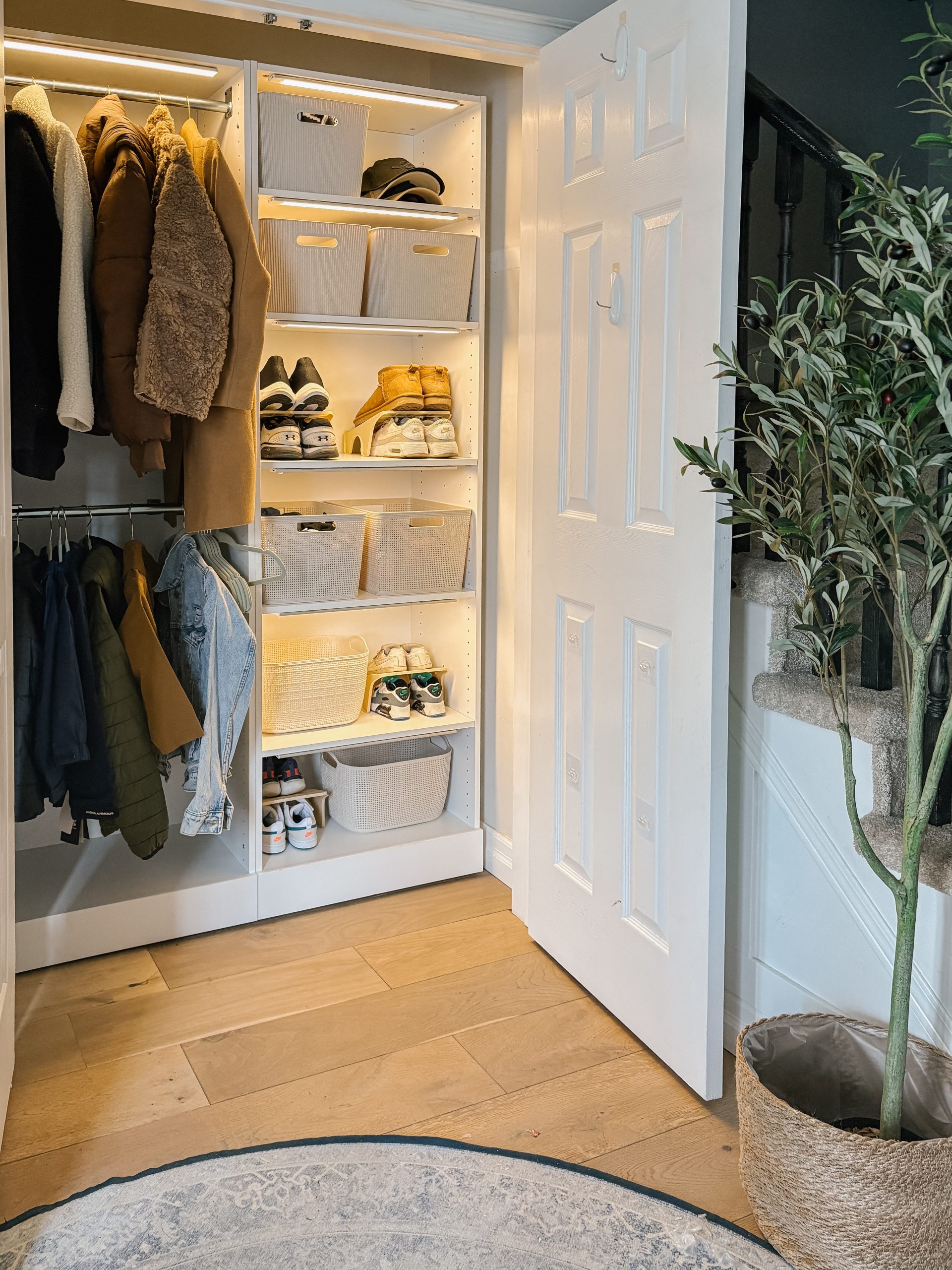
One of the best ways to optimize your storage space is to install a modular closet system in your closet. These systems are designed to adapt to different needs: you can combine drawers, shelves, open compartments, and baskets to store your everyday clothes and accessories neatly – without crowding the floor space.
This way, everything has its place, and it’s way easier to keep things tidy. Whether you’re organizing kids’ clothes, sorting shoes, or storing seasonal items, closet organizers help you make the most of every inch of space.
For small closets, don’t forget that you can also use double rods, slim hangers, and vertical storage. It is not easy to try to deal with small closets, but with the right components, you can make the most of them.
Step 3 — Organize Closets by Family Member
Every member of the family is unique, and the way that their closet is set up should reflect that. Therefore, everyone should have their closet organized in a way that represents their own style and needs. For adults and children alike, it’s important that everyone be offered the opportunity to create a closet space that works for them.
Kids’ Closet Organization Tips
According to a National Poll on Children’s Health conducted by the University of Michigan, 74% of parents of children aged 5 to 8 believe it is essential to teach them to do things themselves.
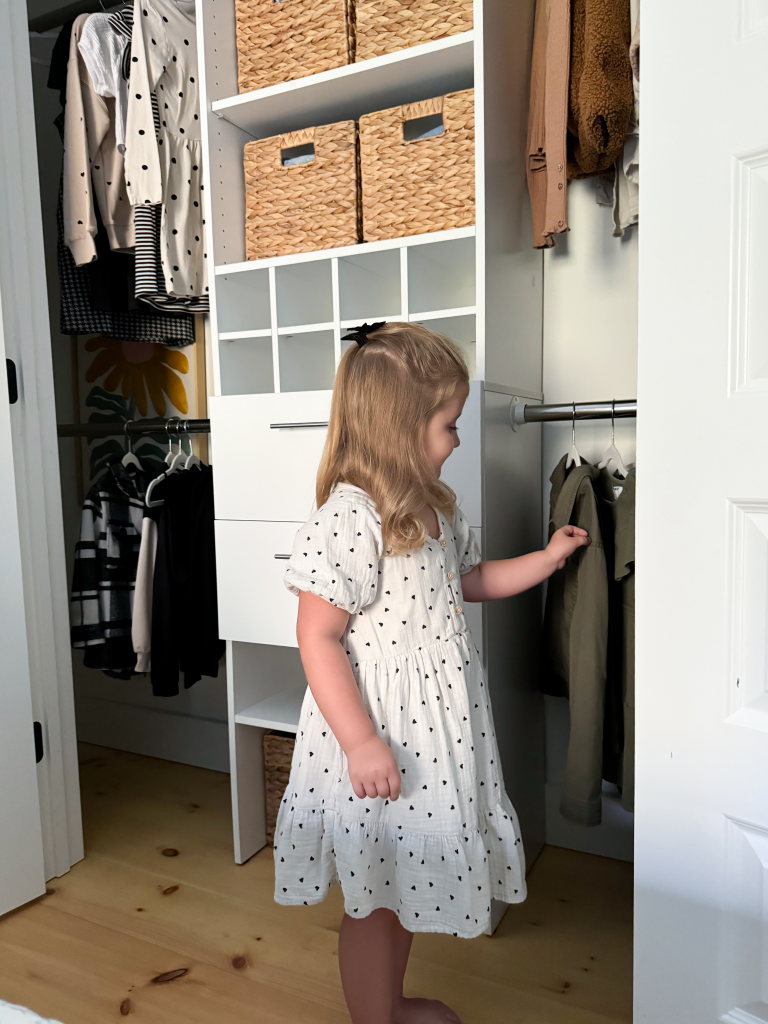
One small but impactful way parents can foster independence is by designing a closet layout that gives kids easy access to their everyday essentials. Keeping clothes and accessories in clearly labeled bins or baskets helps children find what they need without assistance, and hanging rods at child-friendly heights make it simple for them to grab their favorite shirt or put away their jacket on their own.
Choosing a closet system with adjustable shelves and rods adds even more flexibility, letting you adapt the layout as your child grows. When everything is visible and within reach, kids feel empowered to take charge of their own space and develop helpful habits early on.
Shared Closet Solutions for Parents
Often, the adults of the household have to share closet space. You might think that this would quickly lead to a cluttered mess, but it doesn’t have to be the case. By using dividers and modular systems, it’s possible to separate each other’s belongings and avoid confusion
Creating “Zones” in Family Closets
Communal or family closets work best when they’re divided into clearly defined zones. Creating dedicated sections for different categories — like school uniforms, work clothes, seasonal outerwear, or sports gear — makes it much easier for everyone to find what they need quickly. Since each of these clothing types serves a different purpose, keeping them in separate areas ensures better organization, prevents clutter, and helps streamline busy weekday routines.
Step 4 — Keep It Organized with Simple Habits
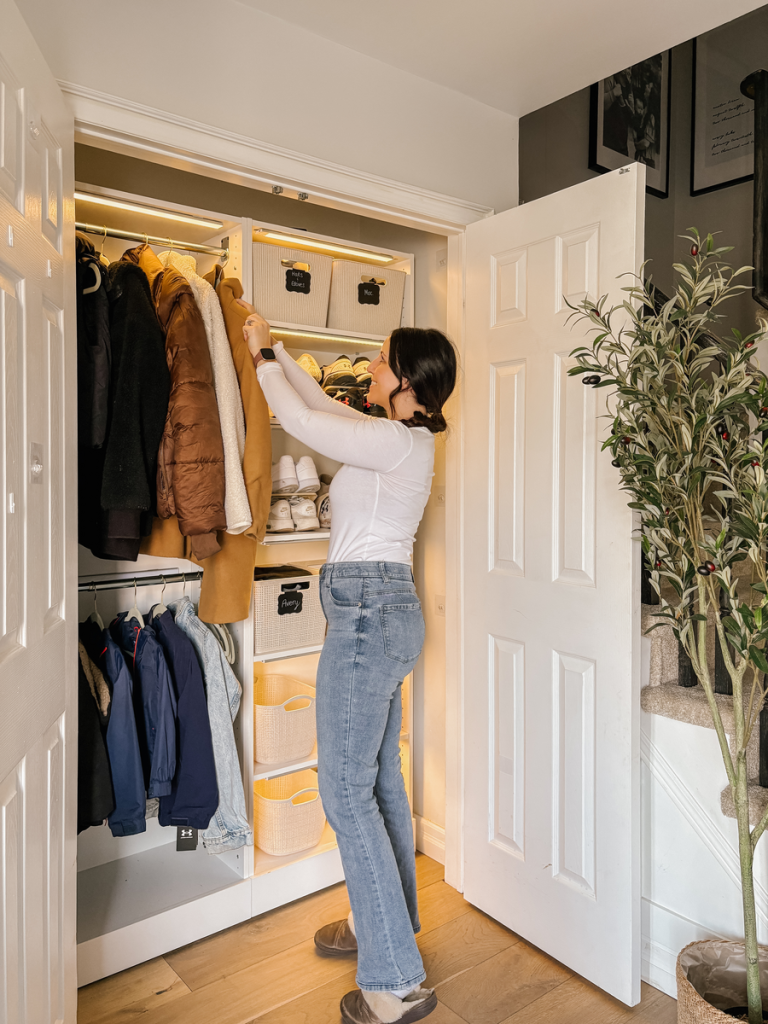
Creating an organized closet space is a big step forward, but the real challenge is maintaining all that you have worked so hard for. Fortunately, there are some simple habits that you can use to help keep your closet spaces organized.
10-Minute Weekly Reset
Take a short 10 minutes out of your busy schedule to put items back where they belong. Your schedule probably feels jam-packed as it is, but you can surely spare 10 minutes to reset your closet spaces so that they don’t fall into major disorganization. It is certainly better to spend those 10 minutes once per week taking care of business rather than spending far more time on it once things have fallen apart.
Seasonal Switch-Outs to Avoid Overcrowding
Since certain articles of clothing are seasonal, once that season is over, you should work on swapping it out in favor of clothing from the season you are currently in. This can help you avoid overcrowding in your closets and make it easier to get the most out of them.
Daily Habits That Encourage Kids to Help
Establish some daily habits that bring your children into the process of keeping things organized. Try to make these habits as fun and constructive as possible. You want your children to truly help, and the best way to encourage this behavior is to model it yourself. Show them how organizing the closets can be fun and benefit everyone.
Bestar’s Smart Storage Solutions
At Bestar, we design closet organization systems that grow with your family. Whether you’re outfitting a walk-in or working with a compact reach-in closet, our closet organizers help you make the most of every square inch—without the stress. We know that busy households have a lot on their plate, which is why our products are designed to make everyday routines smoother and storage more intuitive.
And because form is just as important as function, every piece in our collection features clean lines and a modern aesthetic that complements your home’s style. If you’re ready to bring more order and calm into your living spaces, explore our range of modular closet organizers. With thoughtful features and flexible layouts, there’s a Bestar solution for every family.
Building small habits one step at a time can quickly and easily help your family begin to develop a functional and stress-free closet space that you wouldn’t otherwise have had access to. It is all about taking it one step at a time and enjoying the fruits of your labor once you do.




Question or Comments